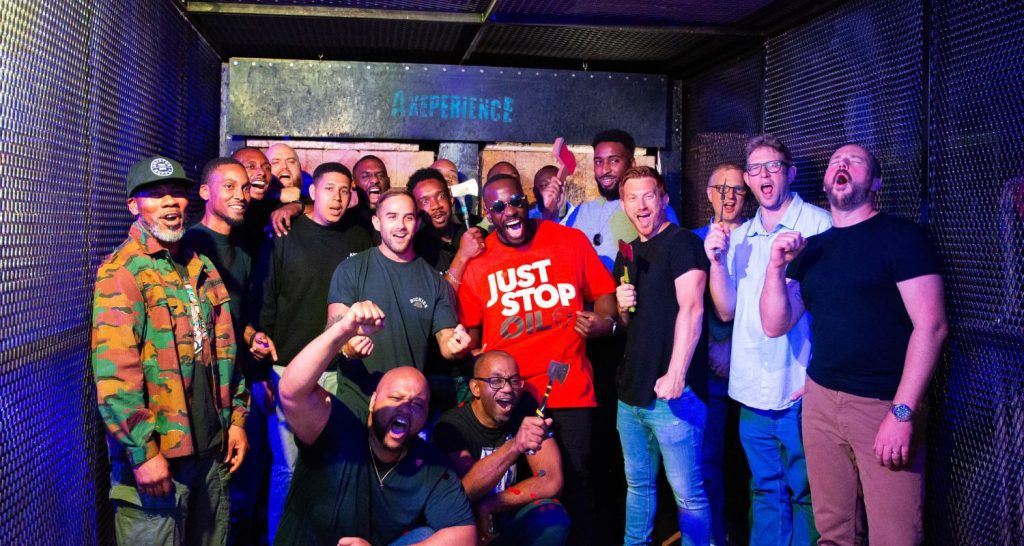

Most corporate team building activities fail in the same way. They’re either too forced (the awkward icebreaker session), too soft (the wine tasting where nobody actually talks to each other), or too dependent on one person’s existing skill (the football tournament dominated by the company’s resident former semi-pro). The activities that work share something specific: they create equal footing, generate stories, and reveal something about your colleagues you didn’t know.
After hosting hundreds of corporate groups across London — from 8-person startup teams to 60-person quarterly offsites for FTSE companies — we’ve watched what works and what doesn’t. This guide ranks the corporate team building options London actually delivers, ordered by how reliably they produce the outcomes you’re booking them for.
What Makes Corporate Team Building Actually Work
Before the list, it’s worth being clear about what a good team building activity should do. It’s not about “having fun” alone — your team can have fun at the pub. The activity needs to create a structured opportunity for people to interact differently than they do in the office. That means three specific things:
- It puts everyone on equal footing — nobody arrives with an unfair advantage from their job role or hobby
- It generates stories the team can reference back at work — “remember when Sarah hit the bullseye?”
- It reveals something — quiet team members surprise everyone, competitive ones get humbled, new joiners get a fast track to belonging
With those criteria in mind, here are the corporate team building activities London does well.
1. Axe Throwing
Yes, we’d put ourselves at the top — but the ranking is based on the criteria above, not preference. Axe throwing checks every box: nobody has done it before, the technique is taught from scratch in the same session, and the natural tournament structure produces a clear winner without anyone feeling embarrassed. The intern who never speaks up in meetings hits a bullseye in round one. The competitive director who arrived planning to dominate finishes mid-table. These are the moments your team references for months.
Sessions run for 60 minutes and accommodate up to 8 people per lane, with multiple lanes available for larger corporate groups. Pricing starts at £30pp off-peak. Visit our corporate booking page for group pricing on bookings of 12 or more.
2. Escape Rooms
Escape rooms test team communication under time pressure, which is genuinely useful. The downside: they favour analytical thinkers and can leave less verbal team members feeling sidelined. Best for groups of 6-8 — bigger groups split into smaller rooms and lose the shared experience element.
If you’re choosing between the two, our axe throwing vs escape rooms comparison breaks down which works better for different team types and group sizes.
3. Cooking Classes
Cooking classes work well for collaborative teams that need to learn how to work together on smaller, focused tasks. They produce something tangible (a meal) that everyone shares, which creates a different dynamic to competitive activities. The risk: they can feel slow-paced for high-energy teams, and one or two confident cooks tend to take over.
4. Sports Days
Old-school sports days — sack races, tug of war, three-legged races — work surprisingly well precisely because they’re absurd. Nobody takes themselves seriously. The downside is weather dependency and physical accessibility issues; not everyone in your team can or wants to run, throw, or jump.
5. Pub Quizzes
Custom-built pub quizzes (especially company-specific ones) can be brilliant for distributed teams that don’t see each other often. They work because they reward different types of knowledge — pop culture, sport, history, work-specific trivia — meaning different people get to be the hero on different rounds.
6. Cocktail Making
Decent option for smaller teams (under 15) and creative agencies. The format keeps everyone engaged and produces shareable photos. Less effective for larger groups and tends to require more hands-on facilitation than venues sometimes provide.
7. Volunteering Days
Often underrated. Volunteering as a team — at a food bank, conservation project, or community centre — builds bonds in a way most paid activities can’t replicate. Particularly powerful for teams that have been through high-pressure periods and need a reset. Requires more planning than off-the-shelf options.
8. Comedy Workshop
Stand-up comedy or improv workshops are high-risk, high-reward. When they work, they’re transformative — people loosen up, shed status, and laugh together in a way that genuinely changes team dynamics. When they don’t work (when participants are too uncomfortable), they fail spectacularly. Best for teams already reasonably close.
If you want to read more about what makes team activities effective, research from Forbes on workplace bonding consistently identifies shared challenge as the strongest predictor of team trust gains.
9. VR Experiences
Group VR experiences (escape rooms, collaborative puzzles) are improving fast. The novelty factor is high, but the social interaction is limited — people can’t see each other’s faces, and the headsets reduce conversation. Better as a 30-minute element of a longer day than as a standalone team building activity.
10. Boat Trips on the Thames
Charter a boat for an afternoon and you’ve got a venue, a view, and a captive audience — but very little structure. Works as a celebration or end-of-quarter reward, less effective as a deliberate team building activity. Pair it with another structured activity for best results.
For more variety in venue options, Eventbrite’s London corporate listings catalogue both standalone activities and full-day team building experiences across the city.
11. Workshops with Outside Experts
Bringing in an outside expert (storytelling coach, leadership facilitator, design thinking workshop leader) can deliver real skills development alongside team bonding. The risk: poor facilitators can leave teams feeling lectured at. Get strong references before booking.
12. Treasure Hunts and City-Wide Games
Group-based scavenger hunts across central London force teams to navigate, decide, and problem-solve together in unfamiliar territory. Energetic, weather-dependent, and requires reasonable mobility — but a great option for younger teams or sales-heavy groups that thrive on competition.
For the latest on what’s available across the capital, TimeOut London’s events guide is the most reliably updated resource we recommend.
Choosing the Right Corporate Team Building Activity for Your Group
Three quick rules of thumb that we’ve seen work consistently:
First, match the activity to your team’s energy. A team that’s just delivered a brutal product launch needs decompression, not more competition. A team that’s gone stale needs sharp competition, not gentle wine tasting.
Second, factor in your team composition. Mixed-age teams need activities where physical advantage doesn’t decide outcomes. Teams with introverts need activities that don’t depend on extroversion to succeed. Mixed-mobility teams need accessible options where nobody sits on the sidelines.
Third, plan the day around the activity, not the other way around. The activity is the anchor; lunch and drinks afterward are the time when the conversation really happens. Most successful corporate team building days run 90 minutes of structured activity followed by 90 minutes of food and drinks together.
If your team’s looking for something that ticks all three boxes — equal footing, story-generating, story-revealing — drop us a line through our team building page and we’ll talk you through how axe throwing has worked for groups like yours.
Frequently Asked Questions — Corporate Team Building London
How much do corporate team building activities in London cost per person?
Most credible corporate team building activities in London cost £30-£60pp for a 60-90 minute session. Add catering and venue hire and budgets typically land between £80-£150pp for a full afternoon.
How far in advance should we book corporate team building?
4-6 weeks for groups of 12+. Peak corporate offsite season runs September-November and January-March; book 8 weeks ahead during these windows.
What size group works best for team building activities?
8-15 people gives the strongest group dynamic. Below 8 lacks tournament energy; above 25 needs splitting into smaller groups with separate facilitators to maintain engagement.
Which corporate team building activity is best for first-time team leads?
Pick activities with clear structure and limited improvisation requirements. Axe throwing, cooking classes, and treasure hunts work because the format is set — you don’t need facilitation skills to make them succeed.
Book Corporate Team Building at Axeperience
Axeperience hosts corporate groups every week across our London Tower Hill and Birmingham city centre venues. We’ve worked with companies from every sector — tech, finance, professional services, agencies, charities — and the format consistently delivers what corporate teams come for.
For groups looking to give their team a flexible reward instead of fixing a date, our gift vouchers cover the same experience and let team members book in their own time.
To check live availability for your corporate group or discuss a custom package, visit axeperience.co.uk/booking/. London and Birmingham, packages from £30pp, groups from 8 to 60 accommodated.